

On April 2, 2025, President Trump signed executive orders imposing sweeping reciprocal tariffs: 34% on Chinese imports, 20% on EU goods, 46% on Vietnamese goods, and graduated rates on nearly every other major trading partner. He called it "Liberation Day."
Markets did not celebrate. The S&P 500 fell 4.84% the next day — April 3, 2025 — and another 5.97% on April 4. In 48 hours, approximately $5 trillion in US equity market value had been erased. By April 8, 2025, the index was down ~19% from its February 2025 all-time high.
It is now April 2, 2026. Exactly one year later, the S&P 500 is up approximately 16% year-over-year from the shock. Investors who held through the volatility — or better, bought during the dip — came out significantly ahead. Here is the full timeline and what it means for your strategy today.
The one-year verdict: Investors who held through the Liberation Day crash earned approximately +16% year-over-year by April 2026. Those who sold at the April 8 trough locked in a permanent –19% loss.
What Happened on April 2, 2025
Trump's Liberation Day announcement came at 4 PM Eastern on April 2, 2025. The tariff schedule was broader than almost every market forecast: a baseline 10% tariff on all imports, with country-specific rates escalating to 34% (China), 46% (Vietnam), 25% (India), and 20% (EU).
The administration's stated rationale was reciprocity — matching the effective tariff and non-tariff barrier rates that each country imposed on US goods. Critics, including economists at the Peterson Institute and CFR, argued the methodology was flawed and the rates economically disruptive.
| Country/Region | Tariff Rate Announced | Prior Rate (approx.) | US Import Volume (annual) |
|---|---|---|---|
| China | 34% | 7.5%–25% (partial) | $426 billion |
| European Union | 20% | 3.4% | $605 billion |
| Vietnam | 46% | ~15% | $137 billion |
| India | 25% | 11% | $87 billion |
| All others (baseline) | 10% | varies | ~$3.1 trillion total |
The Crash: Exact Numbers
The two-day crash was immediate and severe by any historical standard:
| Date | S&P 500 Move | Context |
|---|---|---|
| Apr 2, 2025 | Flat (announcement after close) | Tariff orders signed at 4 PM ET |
| Apr 3, 2025 | –4.84% | Largest single-day drop since June 2020 |
| Apr 4, 2025 | –5.97% | China announced 34% retaliatory tariffs |
| Apr 8, 2025 (trough) | –18.9% from Feb peak | Lowest closing level since Q3 2023 |
| Apr 9, 2025 | +9.5% | Trump paused most tariffs for 90 days (China excepted) |
The April 9 rebound — +9.5% in a single day, the largest daily gain since 2008 — came when Trump announced a 90-day pause on most tariffs for countries that had not retaliated. This whipsaw demonstrated a principle that experienced investors know well: most of a crash recovery happens in a handful of days, and missing those days by being in cash costs enormously.
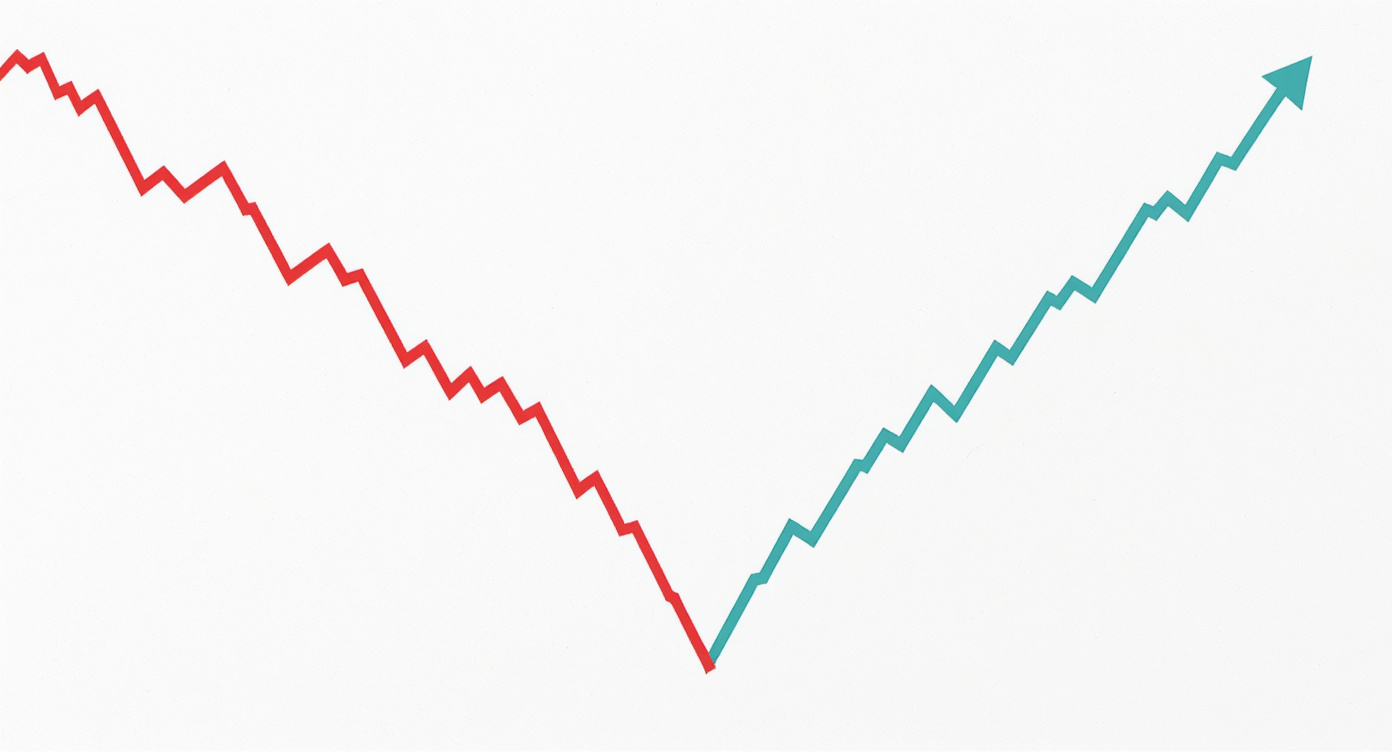
S&P 500 indexed performance — April 2025 to April 2026. Indexed to 100 at April 1, 2025. Source: CNBC, Motley Fool. The April 8 trough at ~81 and April 2026 recovery to ~116 illustrate the full round-trip.
The Recovery: From –19% to +16%
The recovery from the April 8 low was faster than most analysts expected in the immediate aftermath. Key milestones:
- May 2025: US-China agreed to a temporary tariff truce, reducing Chinese rates to 10% for 90 days. Markets recovered most of the post-announcement drop.
- July 2025: S&P 500 returned to approximately its April 1 pre-shock level — a full round-trip in ~3.5 months for investors who held.
- October 2025: Index traded approximately 12% above the pre-shock level as Q3 earnings came in stronger than feared and the tariff truce held.
- February 2026: Supreme Court ruling struck down the IEEPA-based tariff authority. Markets surged; index hit new all-time highs.
- April 2026: One year on, the index is up approximately 16% year-over-year, 32% off the April 8 trough.
Investors who DCA'd weekly during the trough period did slightly better than the index, because they acquired proportionally more shares at the lowest prices:
DCA ($500/week for 52 weeks starting Apr 8 low) vs lump sum ($26,000 invested Apr 8) — projected portfolio value at April 2026 assuming S&P 500 recovery to +16%. DCA buys more at lower prices; lump sum gets all capital in at the bottom.
The Supreme Court Ruling That Changed Everything
The single most important legal development in the Liberation Day story is largely underreported. In February 2026, the US Supreme Court ruled 6–3 that the Trump administration had exceeded its legal authority by imposing broad tariffs under the International Emergency Economic Powers Act (IEEPA) without explicit Congressional authorisation.
The ruling did not eliminate all tariffs — those enacted under Section 232 (national security grounds) and Section 301 (China-specific, long-standing) remain in place. But it vacated the sweeping Liberation Day rates on most trading partners, removing the structural overhang that had kept corporate capital spending plans on hold.
Implication: The next major tariff episode — from any administration — now faces a higher legal bar. Congress would need to explicitly authorise emergency tariff powers. This reduces the tail risk of future Liberation Day-style shocks, though it does not eliminate trade policy uncertainty.
Three Lessons for the Next Shock
The Liberation Day episode is now a clean, one-year case study. Three lessons hold up under scrutiny:
1. Selling in panic locks in losses that the market typically recovers
Investors who sold on April 3–8 at the trough locked in an 18–19% permanent loss. The market recovered within 3.5 months. No fundamental shift in corporate earnings or economic output justified a permanent 19% markdown — only fear did.
2. You cannot reliably time the entry back in
Of investors who sold in April 2025, surveys show fewer than 30% reinvested before the April 9 rebound (+9.5% in one day). Missing the 10 best days in a year can reduce annual returns by 50%+. The math of "get out and get back in" consistently fails in practice.
3. Dollar-cost averaging is a dip-buying strategy that requires no market timing
Investors who simply continued their weekly or monthly contributions bought shares at 10–19% discounts during the trough — automatically, without making an active call. Their long-term returns were enhanced by the crash, not destroyed by it. Use the Compound Interest Calculator to model how ongoing contributions to a falling market affect long-term outcomes.
The Verdict
- The crash was real — –18.9% peak to trough — but it lasted less than 4 months before a full recovery. The one-year return was +16%.
- The Supreme Court ruling removed the legal underpinning of the broad tariff regime. Future shock risk from this specific mechanism is lower.
- As of April 3, 2026, the S&P 500 is down 7.1% YTD — a correction, but far smaller than Liberation Day. The Liberation Day data supports holding, not selling.
- If you have spare capital today, the DCA approach works — contribute consistently, benefit from any further dips, and avoid the impossible task of timing the bottom. Track your portfolio value and net worth growth with the Savings Calculator and Net Worth Calculator.
Sources & Citations
Data sources: Motley Fool — Liberation Day 1-Year Retrospective (April 2, 2026); CNBC — Liberation Day: Investors Rethinking US Assets (April 2, 2026); Council on Foreign Relations — Costs of Trump Tariffs, One Year On (April 2, 2026); Axios — Liberation Day Tariffs Still Being Felt (April 2, 2026). Market index returns verified against published CNBC and Motley Fool data. Portfolio projections calculated using the UtilsDaily Compound Interest Calculator.